Read this article in: 繁體中文 · 简体中文
Walk along the practice ground of any golf club or driving range on a busy evening and you will see the same picture: dozens of golfers, hundreds of balls, and almost no feedback. People practise hard, repeat the same faults, and leave with a vague sense that something is wrong with their swing.
For the venue, that is a missed opportunity. A club or range earns from green fees, balls and bay time, and that revenue has a ceiling — there are only so many bays, tee times and hours in a day. Meanwhile, the most valuable thing a golfer could buy at your venue, help with their game, is something most of them never ask for.
Digital coaching changes that. Here is how golf clubs and driving ranges can turn the practice they already host into new revenue — without hiring, without installing hardware, and without changing how the venue runs.
The problem: lots of practice, very little coaching
Most golfers practise alone. For many of them a lesson is something they think about, not something they book. It feels expensive, it needs scheduling, and they are not sure what to ask for.
Coaches can’t watch every swing. Even a great coaching team only sees a small share of the golfers who pass through the venue. Everyone else practises on their own between lessons — or instead of lessons.
Golfers who stop improving come less often. Practice without visible progress gets boring. And a golfer who stops coming is lost revenue for the venue — on practice, on lessons and on everything else they would have spent there.
The fix is not more staff. It is giving every golfer at every bay a reason to care about their swing — and a simple path from “something is wrong” to “I’ll book a coach.”
What digital coaching looks like at a club or range
The setup is simpler than most venues expect. There is nothing to install: golfers use their own phones, or a tablet on a stand at the practice bay.
- Record. The golfer films a few swings during practice.
- Analyse. AI breaks the swing into positions, gives it a score and highlights the key faults — in seconds.
- Connect. When the golfer wants more than the AI can give, they send the swing to a coach — ideally one of yours.
- Come back. The golfer tracks the score over time and returns to your venue to see if the work is paying off.
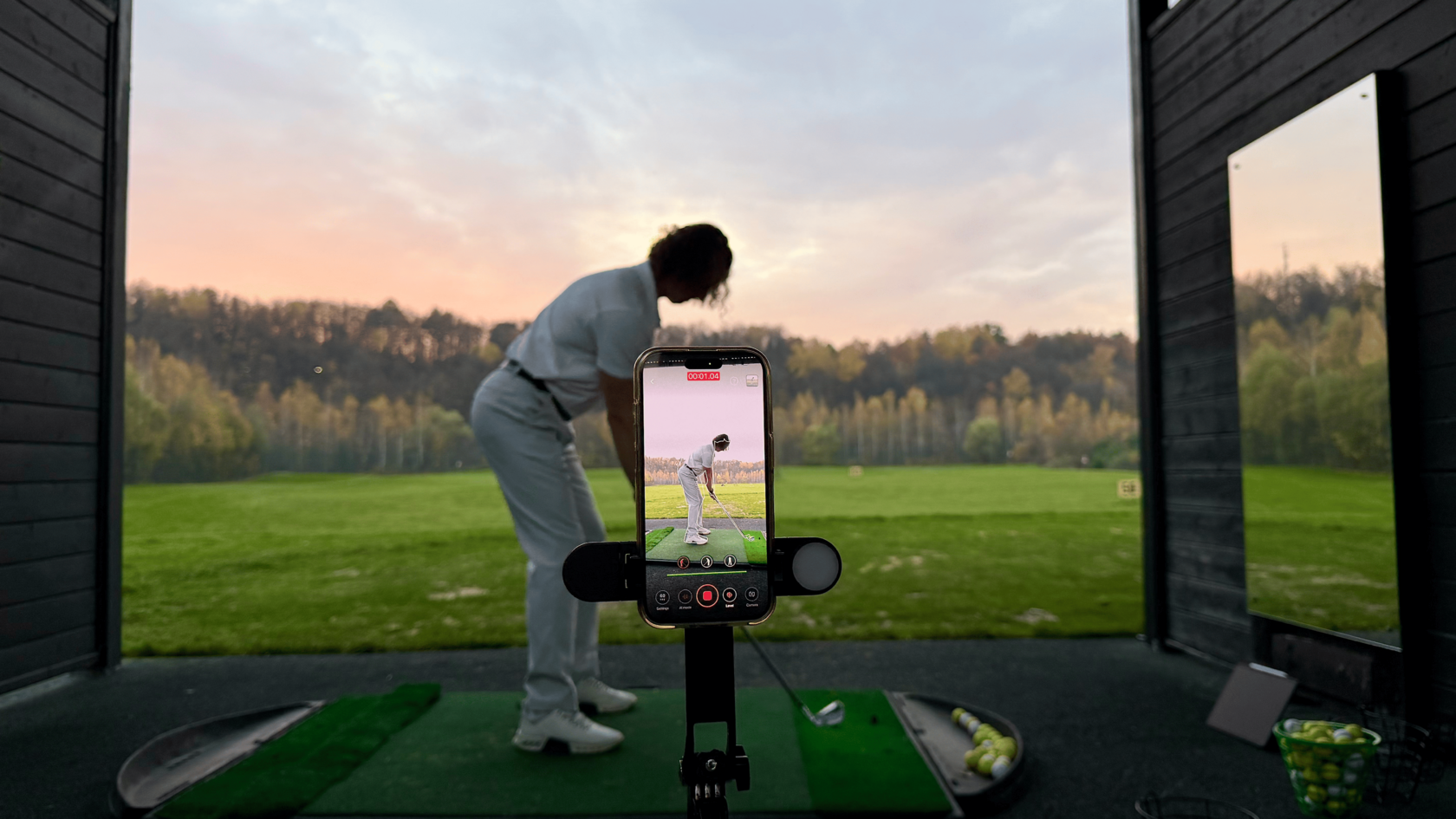
A tablet on a stand at the practice bay: the AI outlines the swing while the golfer keeps hitting.
For the venue, the key point is this: the golfer is already there, already practising. Digital coaching adds value to time they are spending anyway.
Four new revenue streams from the practice you already host
Why it doesn’t need new staff
Will AI replace our coaches?
This is usually the first question we hear from venue owners — and the answer is no. AI finds the mistake; your coach fixes it. The analysis gives coaches a better starting point and more golfers to work with. Golfers still need someone to prioritise, explain and keep them accountable, and that is the coach’s job.
In practice, digital coaching works like a funnel for your coaching team: many golfers try AI analysis, a share of them want a human opinion, and the venue’s coaches are the natural first choice.
The coach picks up where the AI stops: what to fix first, and how.
How to launch it at your venue
UpT helps partners launch: a briefing for staff and coaches, promo materials and a demo day at the venue.
Run a golf club or a driving range? See how the UpT partner program works, or book a 20-minute demo at your venue for you and your coaches.
Four new revenue streams from the practice you already host
- A share of every subscription. When golfers join a coaching app through your venue, you can earn a share of what they pay. With UpT, each partner venue gets its own code; golfers who sign up with it are linked to your venue, and your venue receives 20% of every subscription payment they make. No stock, no upfront cost, no minimum volumes.
- More lessons for your coaches. AI is very good at showing golfers what is wrong. It is much less good at deciding what to fix first — and that is exactly the question that turns into a booked lesson. A golfer who sees “early extension” flagged three sessions in a row is far more likely to book your coach than one who just feels “a bit off.”
- More frequent visits. A swing score that moves is a reason to come back. Golfers who can see progress practise more, and practice happens at your venue. Progress tracking turns a casual visitor into a regular.
- Income for your coaches — and a reason for them to stay. Coaches can review swings remotely and charge for personal reports, at a price they set. That gives them income between lessons and lets them support more golfers than a lesson book allows. For the venue, a coaching team that earns more is a coaching team that stays.
Why it doesn’t need new staff
- No hardware. Golfers use their own phones. A tablet on a stand is optional.
- No new hires. The AI does the first-pass analysis; your existing coaches handle the follow-up.
- No new processes. A QR code at the practice area and a short briefing for front desk and coaches is all it takes.
- No cost for coaches. Coach accounts in UpT are free.
Will AI replace our coaches?
This is usually the first question we hear from venue owners — and the answer is no. AI finds the mistake; your coach fixes it. The analysis gives coaches a better starting point and more golfers to work with. Golfers still need someone to prioritise, explain and keep them accountable, and that is the coach’s job.
In practice, digital coaching works like a funnel for your coaching team: many golfers try AI analysis, a share of them want a human opinion, and the venue’s coaches are the natural first choice.
The coach picks up where the AI stops: what to fix first, and how.
How to launch it at your venue
- Join for free. No investment, no equipment, no minimums.
- Get your venue code. Place QR signs in the practice area, at reception and in the clubhouse.
- Brief your team. Front desk explains it in one sentence; coaches set up their profiles and prices.
- Golfers scan and join. And you get more revenue and fast improving technique golfers.
- Earn every month. Your share of their payments, plus the lessons and visits that follow.
UpT helps partners launch: a briefing for staff and coaches, promo materials and a demo day at the venue.
Run a golf club or a driving range? See how the UpT partner program works, or book a 20-minute demo at your venue for you and your coaches.
